Latest news from Washington Magic. Learn about upcoming Washington DC magic shows and events.

Washington Magic Latest News

Upcoming Magic Shows Through the End of the Year

Check out these amazing magic shows coming up soon in the tri-state area.

  1. Washington Magic, of course
  2. Brian Curry’s Show The Good Liar
  3. The Magic Duel
  4. Regular Shows by Maximum Magic Shop (This time at Gaithersburg Give a Hoot, but at other Locations as well)
  5. Magic Mic. Two locations at El Rey Mexican Restaurant (full stage) and Right Proper Brewing company
  6. Poe’s Magic Theater at the Lord Baltimore Hotel. They are in Baltimore, but it’s very accessible. They have a ton of shows with ensemble shows as well as attracting Headliners from out of town as well.
  7. Magic and Mischief in Ashburn VA at StageCoach Theatre.
  8. Gaithersburg Arts Barn hosts magicians constantly.
  9. McGooby’s comedy Club in Timonium MD is primarily a comedy Club, but they host magic acts all the time.
  10. IBM Ring 50 often does public shows and has a public Christmas show. They are at the Lyceum in Alexandria.
  11. Savino Recine – walk around magic and mentalism at Barbouzard Restaurant at 1700 K Street NW Washington DC every Sunday brunch from 12:00 to 2:00
  12. Museum of Illusions events.

Springsteen the Magician

[This article was first published as a McBride Magic “Museletter” on September 6, 2025 here. It is adapted below.]

“O great creator of being, grant us one more hour to perform our art and perfect our lives.”

–Jim Morrison

Cross-disciplining our learnings is a powerful tool. Consider that when the great Albert Einstein was stuck on a physics problem—he picked up his violin to play Mozart . . . or note Steve Jobs returned often to his experiences in calligraphy and Japanese culture . . . or remember the greatest cross-discipliner of all, Leonardo DaVinci, spent 14 years studying medical anatomy and the dissection of lips to produce history’s most memorable smile.

Eugene Burger, John McLaughlin, and my book, Creating Business Magic, argues just this: There are powerful crossover lessons business leaders can learn from magicians, from how magicians think, and from how to think differently.

And today, we magicians and nonmagicians, we can all cross-discipline valuable lessons from other fields. Watching two recent and amazing documentaries, “Road Diary: Bruce Springsteen and the E Street Band” and Billy Joel: And So It Goes,” I was struck by how much we can all learn from across the waters of our own profession and into the hearts, minds, and secrets of another. And a great place to begin is Rock and Roll and perhaps history’s greatest live performer, Bruce Springsteen.

Picture this: Springsteen the Magician . . . delivering in his mid-70s three-hour shows before over 70,000 people. And ask yourself: What can I learn and apply to my own leadership, public performance, or career? Below, five cross-disciplinary answers.


Constantly Get More Flight Time/Show Time: This is Malcom Gladwell’s proverbial 10,000 hours of “experience” that takes you to mastery, as the years in Hamburg took the Beatles to greatness. In the field of magic, to paraphrase master magician Lance Burton: “The best magician performs the most shows.” And, given how imperative communication skills are for leadership today, young leaders must just go do more speeches . . . and all leaders should do more presentations to test and retest new material and get better . . . and better.

This “Flight Time” allows you to land a plane under any conditions—to recover from any moment or mistake. For example, I once watched Springsteen in concert point to his own 80-something-year-old mother in the New Jersey audience, who he’d previously introduced, to beckon her onstage to go “Dancing in the Dark.” Instead, an overly excited teenage girl could not believe her luck—believing that Springsteen must be pointing at her!

Instinctively, she jumped on stage to dance with the Boss. But then, drawing on his 10,000-plus hours of live performance—and instead of ruining this teenage girl’s life—he danced for a bit . . . and then literally picked her up in his arms and “gifted her” back into the accepting audience. Then—and only then—Springsteen pointed to his own mom: His next dance, as if it was all planned. The crowd erupted.

Feed Your Own Artist: If you’re reading this you are not just a leader, but also an artist—like Apple co-founder and CEO, Steve Jobs. So, you need to follow the example of Springsteen and build an entire team to feed this role. Just like Springsteen needs Thom Zimny or manager John Landau, you need a director, because, as the old Broadway saying goes: “Talent needs direction.” And you need a team of “cross-sellers”—think social media publicists. In fact, whether you’re a young leader or running a Fortune 500 company, you need a 360-degree support team. Even if they begin as “volunteers” or whether, along the way, you need to fill gaps and hire new energies, find talent, nurture it, and build your own E Street Band.

Rock Your Set List: Leadership today involves performance—you are not your Father’s CEO . . . and motivating your workforce or blowing away potential customers demands you organize a “show” that they will not forget. So, cross discipline your next annual conference or customer convention and learn from Springsteen—study his decades of set lists here . . . the killer opening, boom, boom, boom! “Oh my God, where are we tonight?” . . . the rests, texture changes, in-the-moment interactions . . . the gripping stories, funny adlibs . . . or the calling of a kid on stage to help sing “Waitin’ on a Sunny Day.” And, too, the quiet songs, that allow you to perhaps end with a moving call-back, as Springsteen now does, with a chilling performance of “I’ll See You in My Dreams” . . . that I watched completely hush 40,000 people at Wrigley Field.

Remember Every Detail Matters: I’m a believer in “Everything Communicates”—even the smallest details must be managed and herded and aimed in the same direction as your intended persona and brand. So, work the tiniest details. Watch Springsteen in the documentary walk the entire arena for 4-hours with his engineer to check the sound from virtually every seat. And, in terms of leadership communications, video and watch your own performances—pay attention to every single detail to leverage, or fix, and make better.

Follow Your Conviction: This one is simple—even if it’s very, very hard. Follow your inner passion. Like Springsteen. Lean into what brought you to be a leader in the first place, or to this moment of performance or this imperative for change. Let your passion show. Your true self. Show people who you are—and they will love you, follow you, and help you lead them into the future.


David Morey is Chairman and CEO of DMG Global, a best-selling author, and has advised 23 winning global presidential campaigns, 5 Nobel Peace Prize winners, and a who’s who of Fortune 500 CEOs and companies. As a magician, he’s performed at the Inaugural Ball for the 44th President of the United States—and on stages around the world.


Washington Magic Latest News

Mindreading in Clavesana, Italy

Watch David in Clavesana, Italy, read the mind of one of the world’s most famous designers . . . real magic of the mind!


Washington Magic Latest News

Magic Updates

Dear Friends in Magic,
The past month has seen some milestones, but first…

A BIG IDEA
I have a good friend and student who is dealing with a protracted illness in his family. At our last session, he asked, “What does it mean to say magic brings healing?” My heart went out to him: it was such a real question, asked from a place of pain. Eventually, I found some words for him that might be worth sharing here.

First, I need to acknowledge that sometimes we face difficult places where magic can’t go—times of pain or loss where art of any kind isn’t helpful or healing. I discovered this truth while writing Eugene Burger’s obituary: his beautiful “Thread” routine—metaphor of restoration—couldn’t cross the abyss of my loss.

But for me and I hope for you, encountering the abyss is occasional, not constant. And I think this allows room for magic and art to touch and even heal us in the face of life’s challenges.

I saw this many times during my three years performing magic in hospitals—going room to room as a volunteer. In this work, I witnessed many difficult things and emotions: fear, pain, burns and brokenness, worry, relief, boredom, loss of mobility, and emotional flatness. Yet, time and again, I found that magic could make a difference. It could change the patient’s experience and perspective and lift their family’s spirit, even if just for a short while.

As a result, I’ve thought quite a lot about what magical art can do for people moving through the world, experiencing the highs and lows of daily life. Here are some healing things I’ve seen:

—Everyday magic can provide amusement and escape—a break from humdrum life or difficult things. That’s no small thing!

—It also can provide affirmation (“You did it!) or inspiration (“You can do it!”).

—Everyday magic can create the emotion of awe and the transcending pleasures that come with it.

—Magic like this can also connect people. For example, when Eugene turned over your freely selected card to show he’d written your name on it, that was a connection!

In this short list, we open onto healing potential for the people we meet and greet with magic. Yet, as I reflect on them, I have to ask myself: Do I sufficiently remember these possibilities? Do I have the right tricks and words to fulfill them? Is my “Everyday Carry” just stuff I’m lugging around?

In wrestling with this loss of feeling for the work, I’ve personally found it helpful to prime my spirit and intentions as I put my “tools” in place before leaving the house. That way, I’m more ready to perform if the moment presents itself or the need arises.

Because things are tough and upsetting for many people right now: the world needs our magic. If we perform it well and wisely, it can make a real difference.

IN THE STUDIO
At the outset, I talked about milestones. Here is my first story:

I was sitting under the big tent at FISM when the competition awards were about to be announced. First, Mike Caveney took the stage to reveal the recipients of the three non-performing awards. The first one for Creativity and Artistic Vision went to Paul Harris. The History, Research, and Scholarship Award went to Dennis Behr. (Both richly deserved.) And then the recipient of the third one was announced. The Max Maven FISM Special Award for Theory and Philosophy went to… Robert Neale.

Boom! I sat there in shock for about two seconds before leaping to my feet. Our friend and teacher Bob Neale just received this exceptionally prestigious award for his life achievements as a magical thinker. What a thrill! I emailed Bob from the floor with the news, and he was overwhelmed, too. It is a tremendous moment to be recognized like this by one’s international peers.

The other milestone happened at the I.B.M. Convention in Houston, where Jeff McBride and I, in our position as co-directors of the Lance Burton Teen Seminar, had the profound pleasure of passing the wand on to Gabriella Lester.

As many readers will know, Gabriella is a rising star of magic, and she spent years in the Teen Seminar and studied with us at the Magic & Mystery School. Lance, Jeff, and I know Gabriella is the perfect person to lead this important program into the future. Congratulations to her!

And, perhaps, there was a third milestone in this. My own deep recognition that as we age in this great art, it’s sometimes more important to pass on the wand than to wield it.

IT’S NOT MAGIC, BUT…
Recently, for Marjorie’s birthday, we went to see Les Misérables at the Kennedy Center, here in D.C.

I’ll be honest: when I first saw this show in London decades ago, I was underwhelmed. It was overly long, the story was confusing, and the production was self-obsessed with a massive revolving stage that swallowed the actors. I wasn’t feeling it then.

However, I definitely “felt it” this time. The show was truly amazing, with tour de force vocal performances and great clarity about its theme of the transformational power of mercy over the ruthless pursuit of justice. And it built, step-by-step, to the end of the first act (and beyond) when people all over the theater were, I kid you not, shouting their approval as they applauded.

Washington, D.C. was the kick-off of this new U.S. Tour, which is scheduled to play in 30 cities over the next 10 months. I vociferously recommend this production of Les Mis if it comes your way!

HAPPENING AT THE PRESS
First, a word of thanks to you who participated in my first-ever sale last issue and who helped put my own book Inspirations out of print! That’s always a good day: mission accomplished!

Looking ahead, I am delighted to report that Ross Johnson’s book project is right on target: the copyedit manuscript is currently in the hands of its eagle-eyed readers, and I will have the next generation manuscript off to my designer in late September. Meanwhile, superstar magic artist Jay Fortune is creating the illustrations as I write. All is shaping up nicely for an early 2026 release date.

While you wait, perhaps you’d like to stop by Theory and Art of Magic Press to pick up a book for your August vacation? If you go to the “Books” page, you might find one you have been longing to read—perhaps even one of our seven books by new 2025 FISM Special Award recipient Bob Neale.

Thank you, as always, for your support of our boutique shop of carefully curated magic.

FINAL WORDS
Next time, I’ll return to my reflections on how to make “Deeper Deceptions.” And don’t hesitate to be in touch. Also, I have a request: Would you please encourage a friend or colleague to sign up for this newsletter? You can send them here. Continuing to grow this community of thoughtful magicians is one of my highest priorities.
Sincerely,
Larry Hass
Real-World Magician
Dean of McBride’s Magic & Mystery School
Publisher, Theory and Art of Magic Press

www.LawrenceHass.com

Washington Magic Latest News

SAIS Professor John McLaughlin makes ‘magic with meaning’

The former acting director of the CIA has performed for Cub Scouts, church groups, and senior government officials from all over the world (also, collaborated with David Copperfield)

Abigail Green / Published Dec 9
Ever since he saw the 1953 film as a child about the magician and escape artist Harry Houdini, John McLaughlin has been fascinated by magic. “It was spellbinding to me,” he says, recalling the Technicolor production starring Tony Curtis. McLaughlin ran straight to the library in his hometown of Pittsburgh and checked out an illustrated children’s guide to magic.

McLaughlin taught himself some simple card tricks and began performing magic at Cub Scout meetings and church groups. For the next 30-plus years, he honed his craft as a magician while he served in the U.S. Army, pursued his education, and climbed the ranks of his career.

In 1966, McLaughlin graduated from the Johns Hopkins School of Advanced International Studies with a master’s in international relations. After a tour in Vietnam and another stint of graduate work at the University of Pennsylvania, he embarked on a three-decade career in the Central Intelligence Agency, serving in the early 2000s as the agency’s deputy director and acting director. McLaughlin is still asked occasionally to advise in the intelligence field. He is currently a professor of practice in the Merrill Center for Strategic Studies at SAIS, where he teaches the course American Intelligence: Its Role, Practice, and Impact.

Open window with background of clouds and sky
My Other Life
What we do when we’re not on campus

Throughout his illustrious career, McLaughlin has continued to study and perform magic. During the pandemic, he put together an online program with David Copperfield and every year performs at the Aspen Security Forum for senior government officials from all over the world. “In one show, I had a card chosen by the British foreign minister and a card chosen by the French national security adviser, and the former foreign minister of Israel came up and helped me with a rope trick,” he says.

In October, McLaughlin traveled to Las Vegas as part of a small group of students specially selected for a study session by one of the top magicians in the world, Jeff McBride, who is a consultant for just about every major professional magician currently performing in Vegas. It was more of a theoretical class than about learning new tricks, he says.

McLaughlin clarifies that he and his fellow professional magicians do not actually like to call what they do magic tricks. “We call them effects or mysteries,” he says. “It’s not a puzzle or a trick. You’re not trying to get one over on the audience. It’s really that you’re involving them in a narrative, and the magic is being used to illustrate the concepts that you’re talking about.”

As McLaughlin demonstrates a quick example using $1 bills, it’s clear that he is a master of presentation and storytelling as well as his scholarly pursuits. He rattles off historical events, dates, the names of ancient texts, artworks, and magicians, all while weaving a tale of how a simple stack of $1 bills can turn into $20s and then back again—and they do, right before our eyes.

McLaughlin calls the school of magic he practices “magic with meaning.” He has been known to use it in his classes at SAIS to make a point and foster discussion among his students. For instance, he might take a piece of rope, make a sliding knot, and show how the rope turns red as the knot moves from one end to the other.

“In trying to understand the world, and particularly from an intelligence perspective, information arrives incrementally. You never have all the information you want, but you still have to make a judgment,” he says. “And the point I’m trying to illustrate with this simple little rope trick is, be careful to make clear what you know and what you don’t know and what you think. As information arrives, your picture of this situation may change pretty radically because, as you can see, this is a very different rope than we started with.”


“We’re in the middle of the greatest technological revolution in history. So, what’s the role of magic in that? It’s to remind people that we don’t know everything. There is still an element of mystery to life.”

John McLaughlin
Professor at SAIS


McLaughlin is one of the founding members of Washington Magic, an ensemble show performed in a 215-year-old townhouse in D.C., the former home of President James Monroe and current home of the Arts Club of Washington. The elegant performance hearkens back to the full-evening magic shows of his youth that often included live orchestras, troupes of assistants, and tuxedoed magicians, McLaughlin says. At Washington Magic, the 90-minute show features four or five performers, each of whom does about a 15-minute set on stage in the intimate 70-seat theater. Tickets include drinks and heavy hors d’oeuvres.

Unfortunately, McLaughlin says, he had to miss a recent show because of a professional engagement: A Stanford University professor had invited him to participate in a simulation for her class in which teams of students would react to a crisis scenario and propose solutions to the National Security Council, which would assess their responses and provide feedback based on the members’ experience. “I played the secretary of state,” McLaughlin says.

While magic is an ancient art, he says he believes it is particularly relevant to this moment in history, when cellphones, AI, and other advancements give us the illusion of complete knowledge. “We’re in the middle of the greatest technological revolution in history. So, what’s the role of magic in that?” McLaughlin asks. “It’s to remind people that we don’t know everything. There is still an element of mystery to life.”

Washington Magic hosts a show every four to six weeks or so. Check the website for upcoming dates and tickets to see McLaughlin perform.

My Other Life is a recently launched At Work series that lets us get to know our Johns Hopkins colleagues better. Do you or one of your co-workers have a personal passion that would make a good story? Let us know at hubatwork@jhu.edu.

Washington Magic Latest News

From Larry Hass:

From Larry Hass:

I am so pleased to be back performing at Washington Magic.

It has been a few years since I was on the show there. Since then, I have been performing and teaching in Las Vegas with Jeff McBride. I also had a two-month, extended run of my solo show, Magical Life, in Chicago at the Rhapsody Theater.

So, for this show, I will be performing new routines I developed for the Chicago Show. I hope the Washington Magic audience will find them artistic and astonishing!

One thing I love about Washington Magic is the wonderful people who come out to the shows. I look forward to seeing old friends in the audience and new ones, as well!

Sign up for my inspirational magic newsletter at: www.TheoryandArtofMagic.com.  

Washington Magic Latest News

An Interview with Krishan the Magician

What’s the first magical thing you remember seeing? And who is the first magician you ever saw?
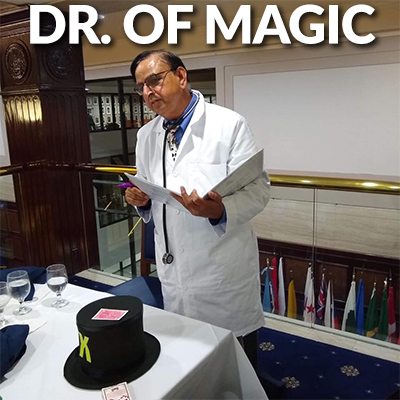
In 1976, my wife and I went to our first magic show in Jaipur, India. We still talk about the show as it was during our honeymoon. I remember the magician wearing a long coat and turban, swallowing swords and putting that sword in a bucket.

Who got you into magic? Who has been a key mentor, or two, or three, for you in your magic career? And how can someone get into magic today—or get their kid into magic?

I have been interested in magic since I was very young because my father gave me a book called “Math & Magic”, not because I was interested in magic, but because I was not good at math. Little did he know what an impact that would make.
 
I have been doing playing card and mathematical magic since I was eight. As a practicing physician, I did magic for my patients during chemotherapy infusion in my clinic. But in 2013, I attended the McBride School of Magic and Mystery in Las Vegas. This was my first experience learning Magic professionally. I did, however, once attend a Continued Medical Education Class which was related to Magic in Medicine.  My mentors in Magic are Jeff McBride, Eugene Burger, and Larry Hass. I have been lucky to learn from many magicians outside of the school such as Eric Henning, David Morey, Scott Alexander; just to name a few.

Read more

Washington Magic Latest News

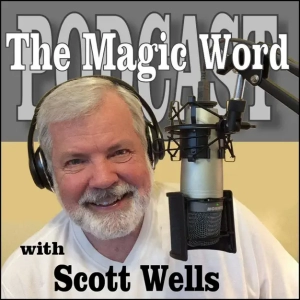
John McLaughlin -The Intersection Between Spy Craft and the Craft of Magic

The Magic Word Podcast

It was a hot and muggy night in Warsaw, unusual for this time of the year. Sitting at the bar was a man nursing a beer. No one noticed his unkempt appearance or the bulge in his jacket pocket. As the bartender rang up another transaction, a young man wearing a ball cap swung open the door. A quick sideways glance was given to the stranger who strode over to take a seat at the bar. The young man ordered a beer then turned and quietly said, “Erdnase.” After a few uneasy moments that seemed like an eternity, the man reached into his pocket. He pulled out a deck of cards and suddenly…it was magic time. That could have gone in a completely different direction and oftentimes it does in the world of spy craft. This week we chat with the former Acting Director of the Central Intelligence Agency (C.I.A.), John McLaughlin. There is an overlap and kinship in the keeping of secrets both as spies and as magicians, though one doesn’t control the balance of life and death in their hands. John is an American Intelligence Officer who served as Deputy Director of the C.I.A. under President Bill Clinton and then briefly as the Acting Director of the C.I.A. under President G.W. Bush then retired in 2004. McLaughlin currently serves as a Senior Fellow and Distinguished Practitioner-in-Residence at the Philip Merrill Center for Strategic Studies at the Johns Hopkins University Paul H. Nitze School of Advanced International Studies (SAIS) in Washington, D.C View fullsize View fullsize View fullsize View fullsize View fullsize View fullsize View fullsize

Listen on Apple Podcasts